
Introduction
Running a business in Pakistan without proper sale purchase software is like keeping accounts in a paper register: slow, error-prone, and impossible to scale. Sale purchase software brings your buying, selling, stock, and payments into one system, so you always know what you bought, what you sold, what is sitting in stock, and who owes you money. In this guide, we explain what sale purchase software does, which features matter most for Pakistani retailers, wholesalers, and distributors, and how to choose the right one for your business.
What Is Sale Purchase Software?
Sale purchase software is a business tool that records and manages the complete buying and selling cycle of a company. When you buy stock from a supplier, the software records the purchase bill, updates your inventory, and tracks the payment you owe. When you sell to a customer, it generates the sales invoice, reduces stock automatically, and records the payment received or the credit given.
It is used by retail shops, wholesalers, distributors, pharmacies, and trading businesses across Pakistan. Any business that buys goods and sells them onward, whether a small karyana store in Multan or a distribution company supplying all of Punjab, benefits from having this cycle managed in one place instead of across registers, notebooks, and Excel sheets.

Key Features to Look For
Not all sale purchase software is equal. When comparing options, check for these core features:
1. Purchase Management
The software should record purchase orders, supplier bills, and payments against each bill. You should be able to see, at any moment, how much you owe each supplier and which bills are still unpaid.
2. Sales and Billing
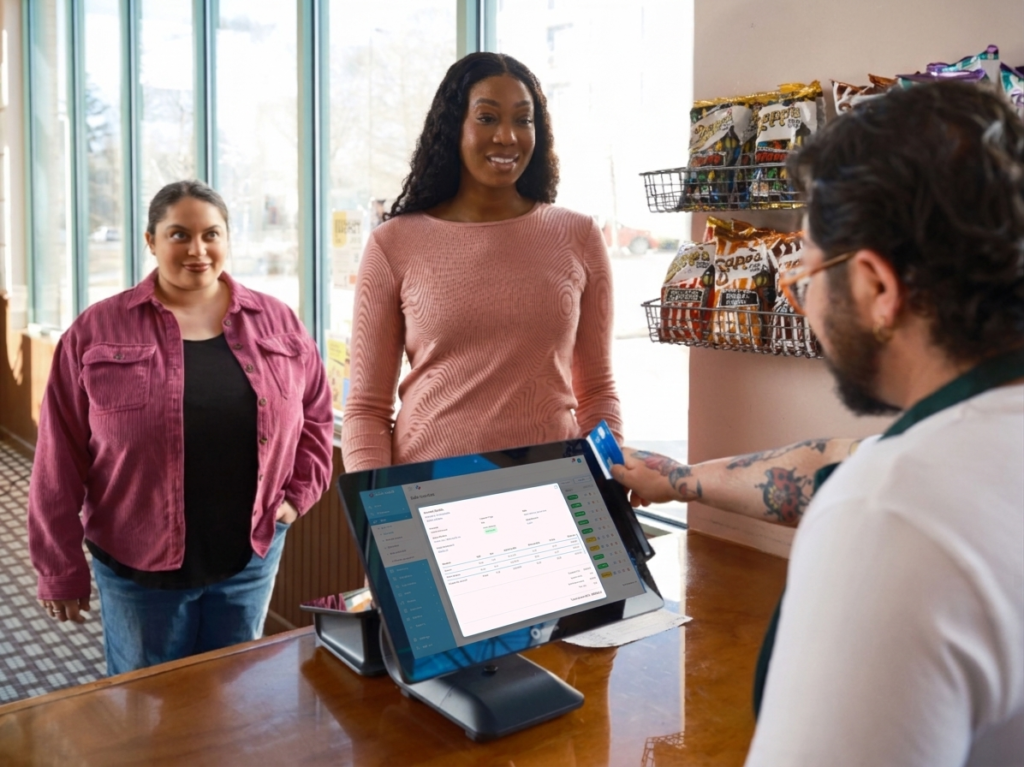
Fast billing is essential, especially at a busy counter. Look for barcode scanning, quick item search, discounts, and the ability to print or share invoices instantly.
3. Inventory Synchronisation
Every purchase should increase stock and every sale should decrease it automatically. Without this link, stock figures are always wrong, and wrong stock figures mean lost sales or dead stock sitting on shelves.
4. Supplier and Customer Ledgers
A proper ledger (khata) for every supplier and customer is non-negotiable in Pakistani trade. The software should maintain running balances, record partial payments, and show complete transaction history for any party.
5. Tax-Ready Invoicing
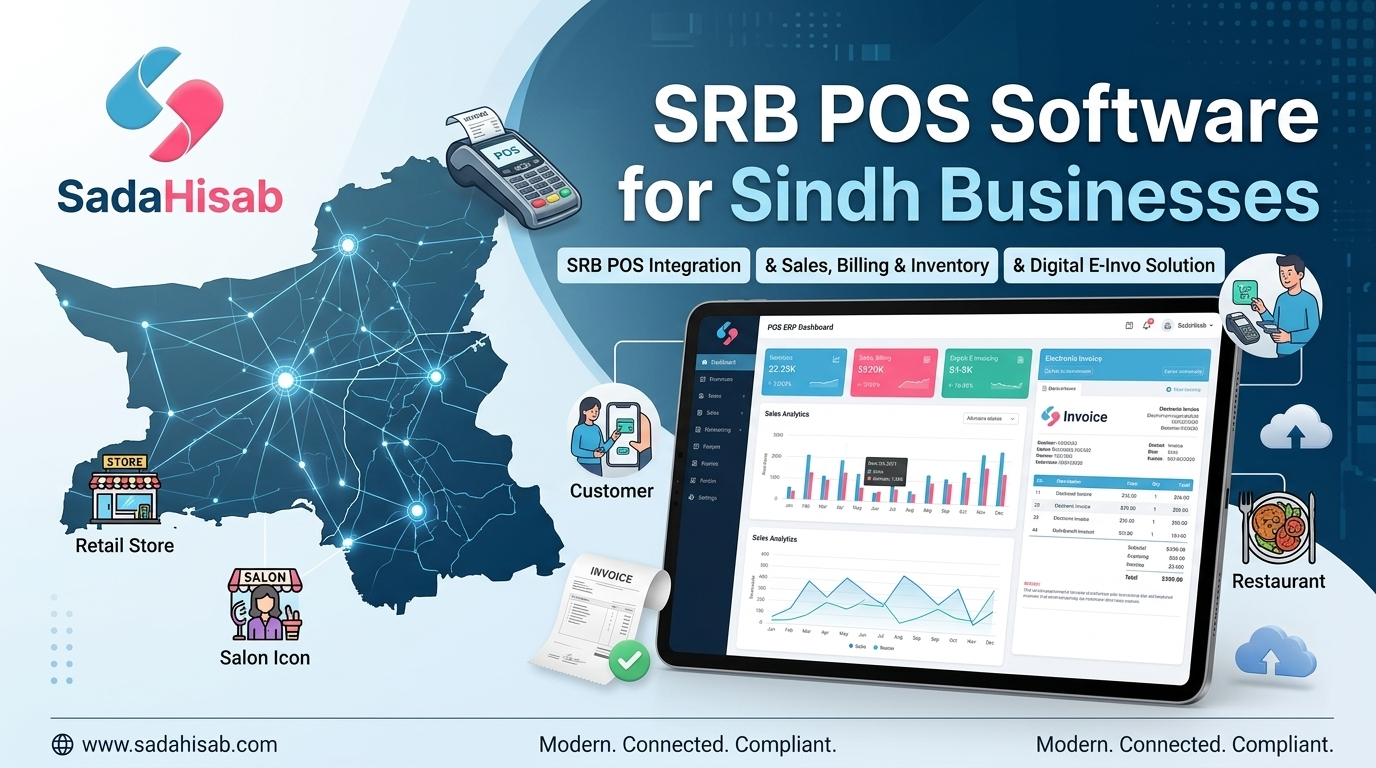
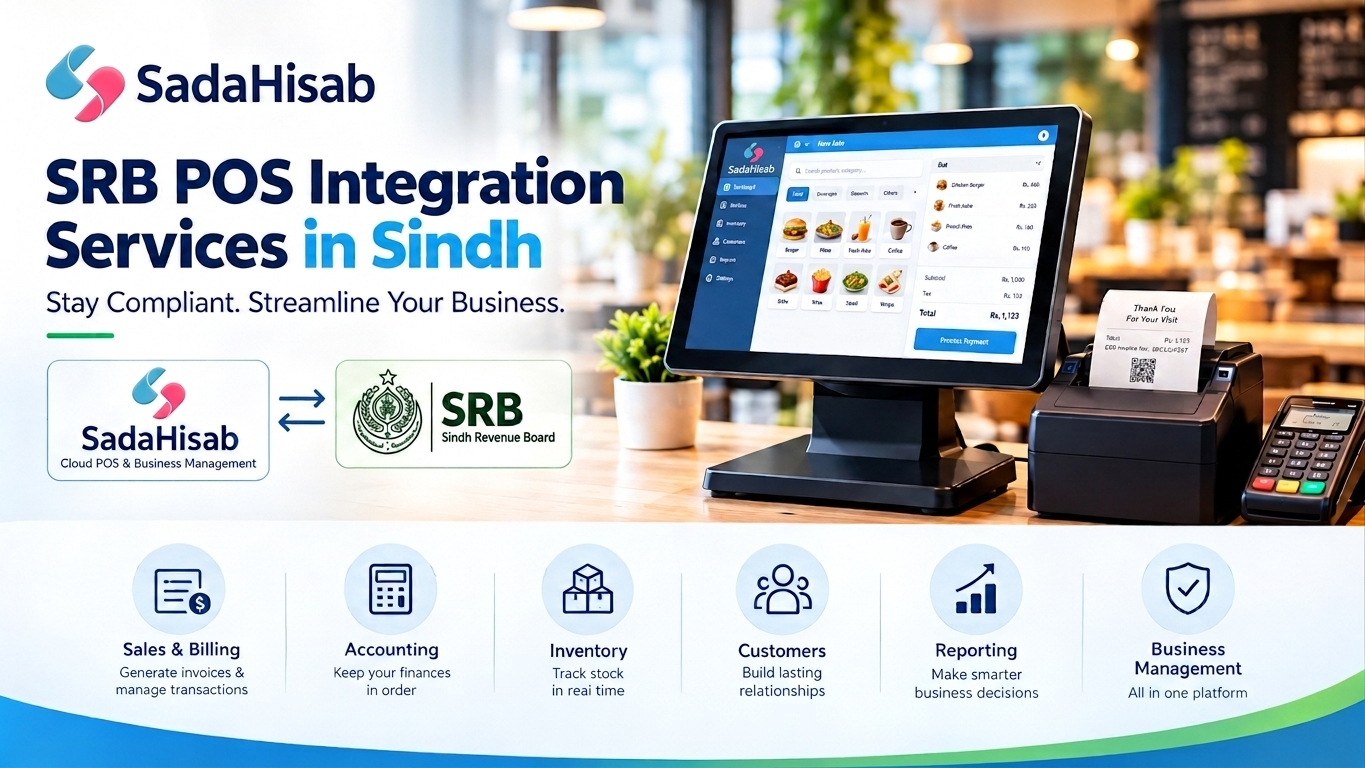
With FBR digital invoicing and PRA/SRB requirements expanding, your software should generate compliant invoices. FBR-integrated systems can report invoices and print the required codes, saving you from manual compliance work and penalties.
6. Reports and Business Insights
Good software answers questions in seconds: Which product sells fastest? Which supplier gives the best margin? Which customers pay late? Daily sale reports, profit reports, and stock ageing reports turn raw entries into decisions.
Sale Purchase Software vs Basic Billing Software
Many shop owners start with simple billing software and later realise it is not enough. Billing software only prints invoices. It does not track what you purchased, what stock remains, or what you owe suppliers. Sale purchase software covers the full cycle: purchase, stock, sale, payment, and ledger. If your business buys and sells physical goods, billing alone will always leave gaps that show up as stock shortages, missed supplier payments, or cash flow surprises at month end.
Benefits for Pakistani Businesses
1- Less manual work, fewer errors. Entries made once flow everywhere: a purchase updates stock and ledger together, so there is nothing to re-enter and no mismatch between records.
2-Better stock control. Low-stock alerts stop you from running out of fast-moving items, and slow-moving stock reports help you clear dead inventory before it eats your capital.
3-Credit and recovery management. Udhaar is a reality of Pakistani trade. Automated ledgers and ageing reports show exactly who owes what and for how long, making recovery follow-ups systematic instead of guesswork.
4-FBR compliance without extra effort. When invoicing is integrated with FBR, compliance becomes a by-product of normal billing rather than a separate monthly headache.
5-Decisions based on data. When you can see your best-selling products, best suppliers, and most profitable customers, you stop running the business on gut feeling.
How to Choose the Right Sale Purchase Software
Use this checklist before you buy:
- Local support: Can you reach a support team in Pakistan, in your language, during business hours?
- Clear pricing in PKR: Is the price a flat subscription, or are there hidden per-invoice or per-user charges?
- Offline capability: If your internet drops, can you still bill customers and sync later?
- Language and ease of use: Can your existing staff learn it in a day or two?
- Room to grow: Does it scale from a single shop to multiple branches, and can it grow into full ERP with accounting and HR later?
- Free trial or demo: Never buy without testing it on your own products and your own counter.
How Sada Hisab Covers the Sale-Purchase Cycle
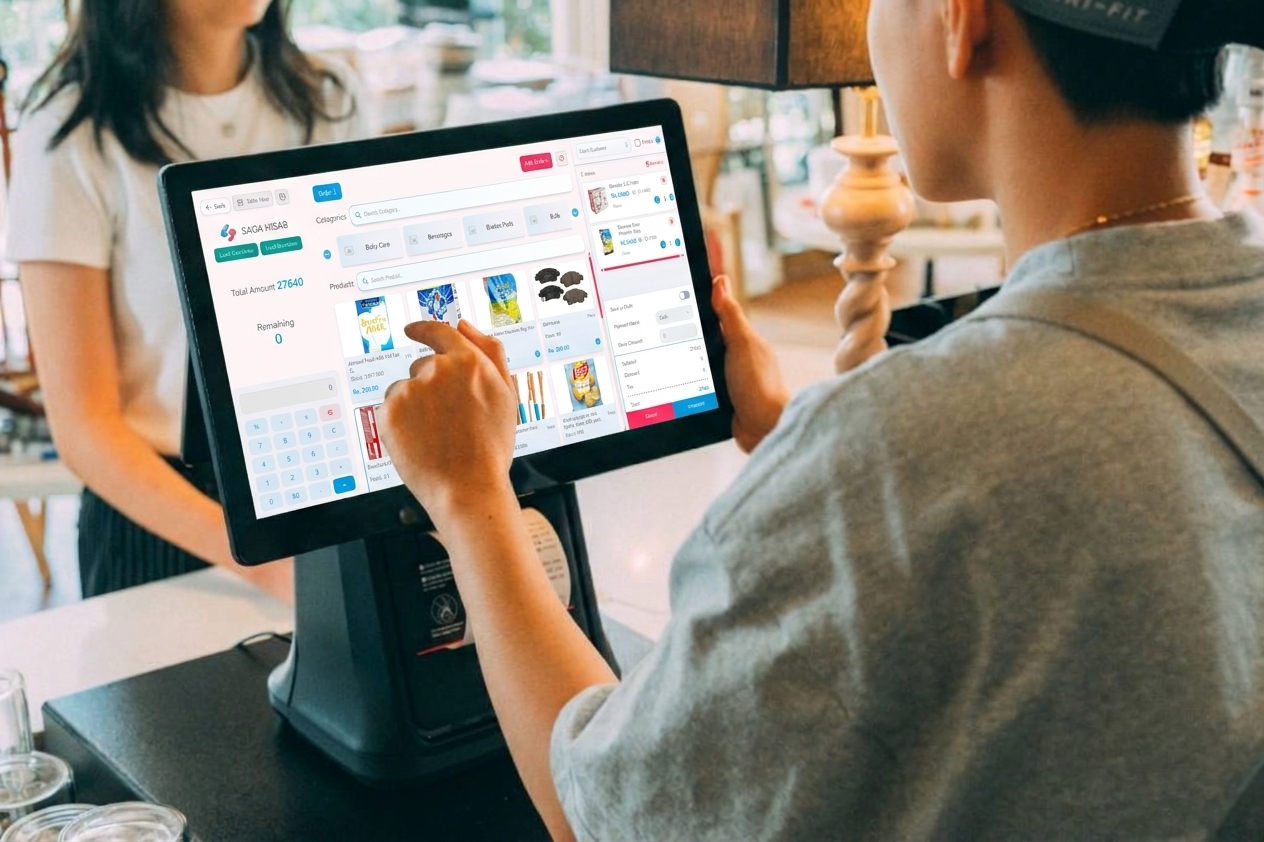
Sada Hisab is built as an ERP-based POS, which means the sale-purchase cycle is not an add-on but the core of the system. Purchases, sales, inventory, ledgers, and accounting update together in real time, and FBR, PRA, and SRB integration in sindh is built in for compliant invoicing. Because it is developed for Pakistani businesses, it handles local trade practices — supplier and customer ledgers, credit management, and multi-branch stock — out of the box, with local support to match.
Conclusion
Sale purchase software is one of the highest-return investments a trading business in Pakistan can make. It replaces registers and guesswork with accurate stock, clean ledgers, and compliant invoicing — and it gives you the reports to grow with confidence. Start by listing your must-have features, test two or three options on your own data, and choose the system your team will actually use every day. If you want to see how an integrated system handles your full sale-purchase cycle, book a free demo of Sada Hisab and try it on your own products.