
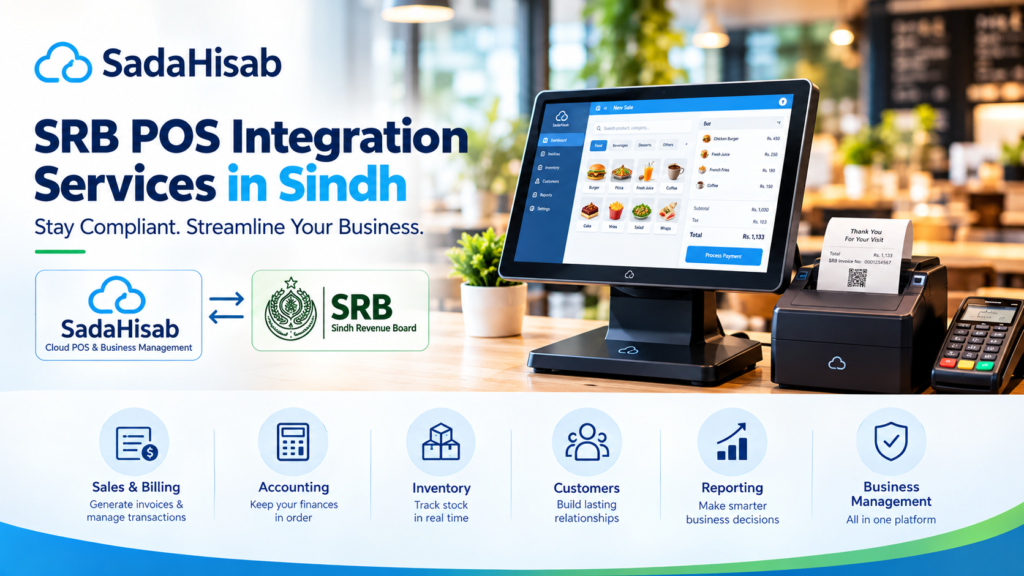
Running a restaurant, café, salon, gym, beauty business, or other service-based business in Sindh means keeping track of much more than daily sales. You need to manage invoices, customers, payments, staff, inventory, returns, accounts, and tax-related records while keeping your business moving. When sales information also needs to be communicated through a Point of Sale system, relying on disconnected software or manual processes can create unnecessary work. This is where professional SRB POS integration services can make a significant difference.
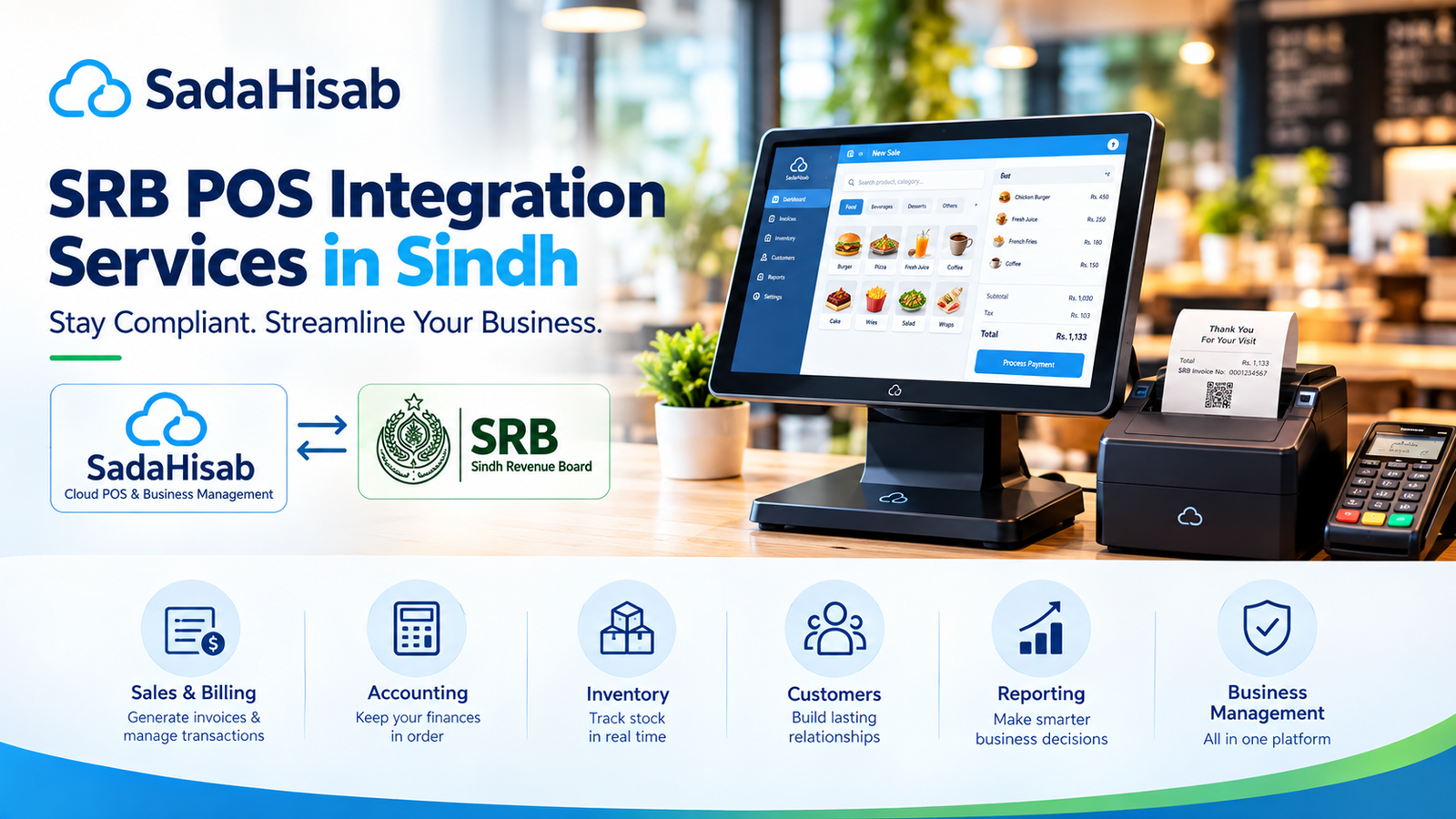
SadaHisab provides SRB POS integration services in Sindh designed to connect your business POS operations with the Sindh Revenue Board’s POS requirements while giving you a broader cloud-based system for sales, billing, accounting, inventory, reporting, and business management. The goal is not simply to connect a POS with SRB. A useful integration should fit into your everyday workflow, so your staff can generate invoices and manage sales without turning every transaction into a technical exercise.
The Sindh Revenue Board has established a POS system for relevant businesses and provides official resources for POS registration, integration, invoice verification, and technical guidance. SRB’s official POS information also explains that its system can communicate with contemporary POS solutions. For businesses that need SRB POS integration services, understanding both the regulatory side and the operational side is therefore important.
What Are SRB POS Integration Services?
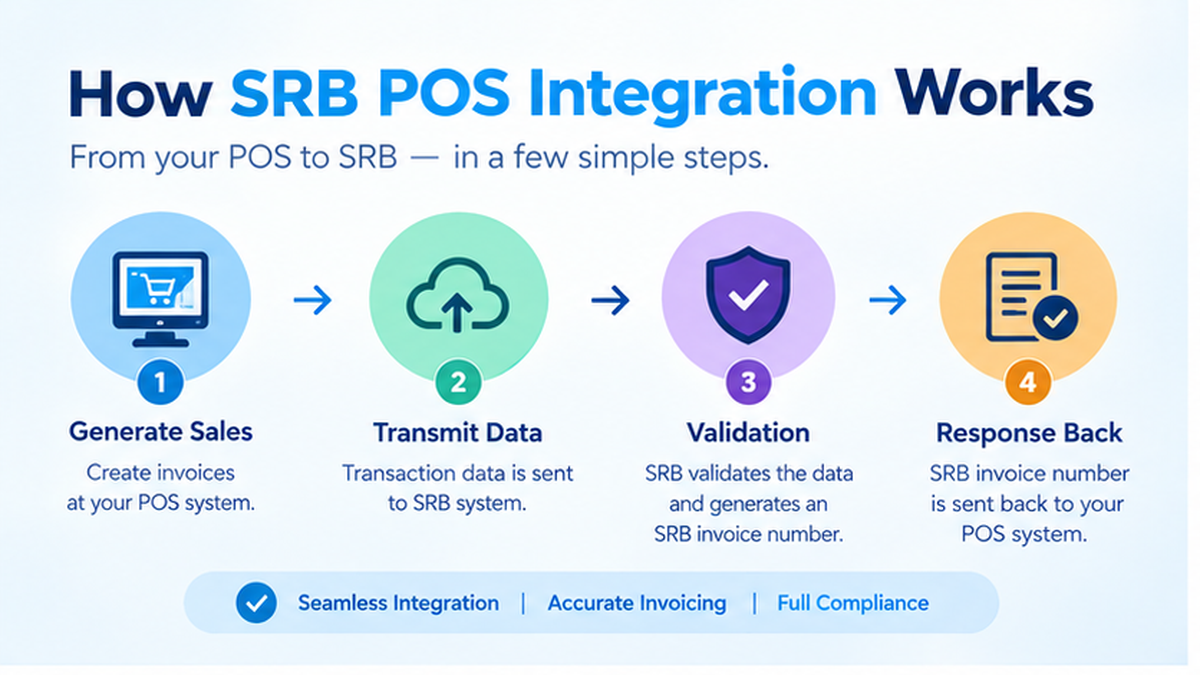
SRB POS integration services are professional services that help a business connect its Point of Sale software with the Sindh Revenue Board’s POS environment so that applicable sales and invoice information can be transmitted according to the required process. SRB’s official integration guide describes a system in which sales transaction data is communicated to the SRB system, validated, and associated with an SRB invoice number that can be transmitted back to the POS system.
For a business owner, however, integration is more than a technical connection. Think about what happens during a busy Friday evening at a restaurant. Orders are coming from multiple tables, cashiers are issuing bills, customers are paying, kitchen staff are preparing orders, and management still needs accurate sales information. If the tax integration process sits completely outside this workflow, employees may have to duplicate information or switch between systems. Proper SRB POS integration services aim to reduce this friction by making the compliance-related process part of the normal POS workflow.
This is why choosing an integration provider should involve more than asking whether a software system is “SRB compatible.” You should also ask how invoices are generated, how transaction data is handled, what happens when a transaction needs correction, how branches are managed, and what support is available when an integration issue occurs.
Why SRB POS Integration Matters for Sindh Businesses
The SRB framework includes online integration requirements for applicable businesses, and SRB provides specific POS resources and technical documentation for integrated persons. Its official FAQ identifies categories of restaurants subject to POS integration requirements, including certain hotel restaurants, international restaurant franchises, restaurants with multiple branches in Sindh, restaurants in air-conditioned shopping malls, restaurants selling through online marketplace platforms, and restaurants meeting specified turnover criteria.
That makes SRB POS integration services particularly relevant for businesses that have reached a point where manual billing is no longer practical or where their business falls within applicable SRB integration requirements. Instead of treating integration as a separate administrative burden, businesses can build it into their sales infrastructure.
Businesses should always confirm their specific tax and integration obligations with SRB or a qualified tax professional because requirements can change and may depend on the nature of the service, business structure, location, turnover, and applicable rules.
Who Needs SRB POS Integration Services in Sindh?
The need for SRB POS integration services depends on the business category and applicable SRB requirements. Restaurants are a major focus of the SRB POS system, but service businesses can also fall within the broader POS environment. SRB’s official POS page describes its POS system as an e-invoicing system covering sectors such as hospitality, health, and beauty.
For business owners, the practical question is often straightforward: “Does my business need to integrate its billing system with SRB?” The answer should be determined according to current SRB rules rather than assumptions based only on business size or industry. The official SRB website maintains its acts, rules, amendments, notifications, and POS resources, making it an important reference point when checking current requirements.
Restaurants, Cafes and Hospitality Businesses
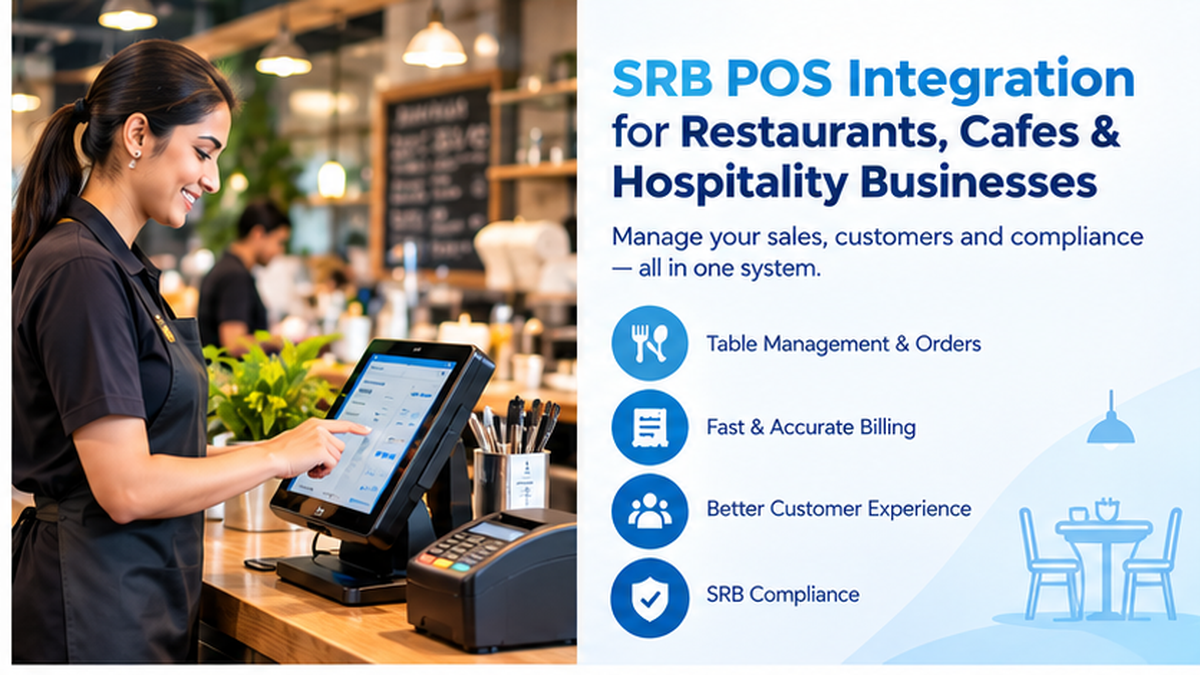
Restaurants are one of the most visible use cases for SRB POS integration services. A modern restaurant may have dine-in orders, takeaway sales, delivery orders, multiple payment methods, discounts, cancellations, returns, and multiple branches. Managing all these transactions manually while also maintaining the required tax records can become difficult as transaction volume increases.
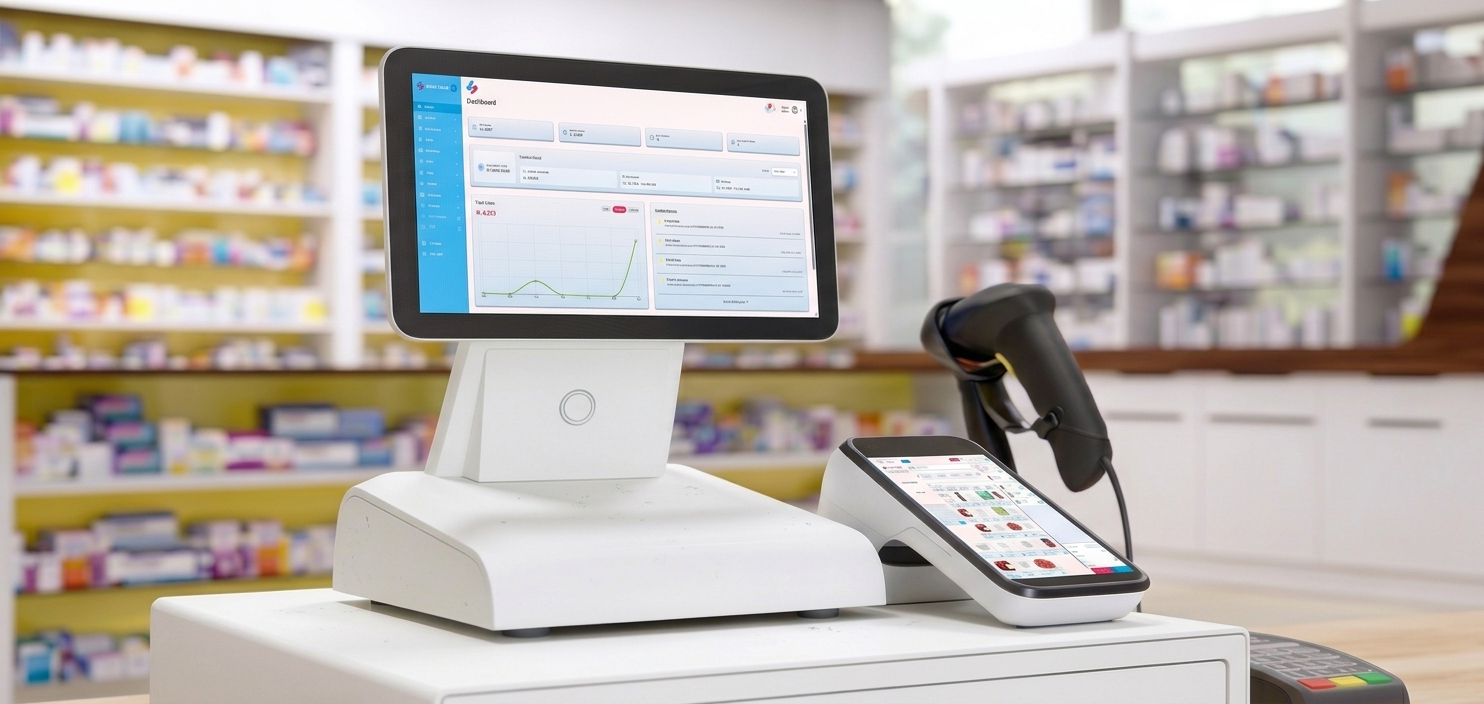
SadaHisab can provide the operational POS layer for managing products, sales, invoices, inventory, accounting, reports, and branches while supporting the SRB integration workflow. This gives restaurant management a clearer view of what is happening inside the business instead of treating tax reporting as an isolated activity.
If your restaurant also operates in Punjab, you may need to manage other provincial tax integrations depending on where services are provided. For businesses operating across provinces, it can be useful to build a broader tax-compliance technology strategy instead of implementing one system at a time.
Beauty, Salon, Gym and Other Service Businesses
Service businesses have their own operational challenges. A salon may manage services, packages, staff commissions, appointments, customer records, and payments. A gym may manage memberships and recurring payments. A beauty business may sell products alongside services. In each case, the POS system needs to support the actual business rather than acting as a basic digital cash register.
This is where SRB POS integration services become part of a larger business-management requirement. A connected system can help centralise sales information and provide management with clearer records while the applicable SRB integration process is handled through the configured POS environment.
How SRB POS Integration Works
At a high level, SRB POS integration services connect the business’s POS environment with SRB’s designated system or integration mechanism. SRB’s official documentation explains that the Sales Data Controller communicates with the POS system, receives and validates sales transaction data, generates or transmits an SRB invoice number, and communicates invoice information through the integration process.
The exact technical implementation depends on the software architecture and the integration method being used. This is why businesses should avoid choosing a provider simply because it claims to offer “SRB integration.” Ask whether the provider understands the technical documentation, registration process, invoice workflow, error handling, and day-to-day operation of the integrated POS.
Sales Data and Invoice Transmission
For the business owner, the important point is that sales should flow through a properly configured process rather than being manually recreated after the transaction. When a customer completes a purchase, the POS should capture the relevant transaction details and process the invoice according to the configured integration workflow.
SRB also provides an invoice verification facility through which an invoice can be checked. This creates an additional layer of visibility for customers and businesses because the issued invoice can be verified against the SRB system.
Why Choose SadaHisab for SRB POS Integration Services?
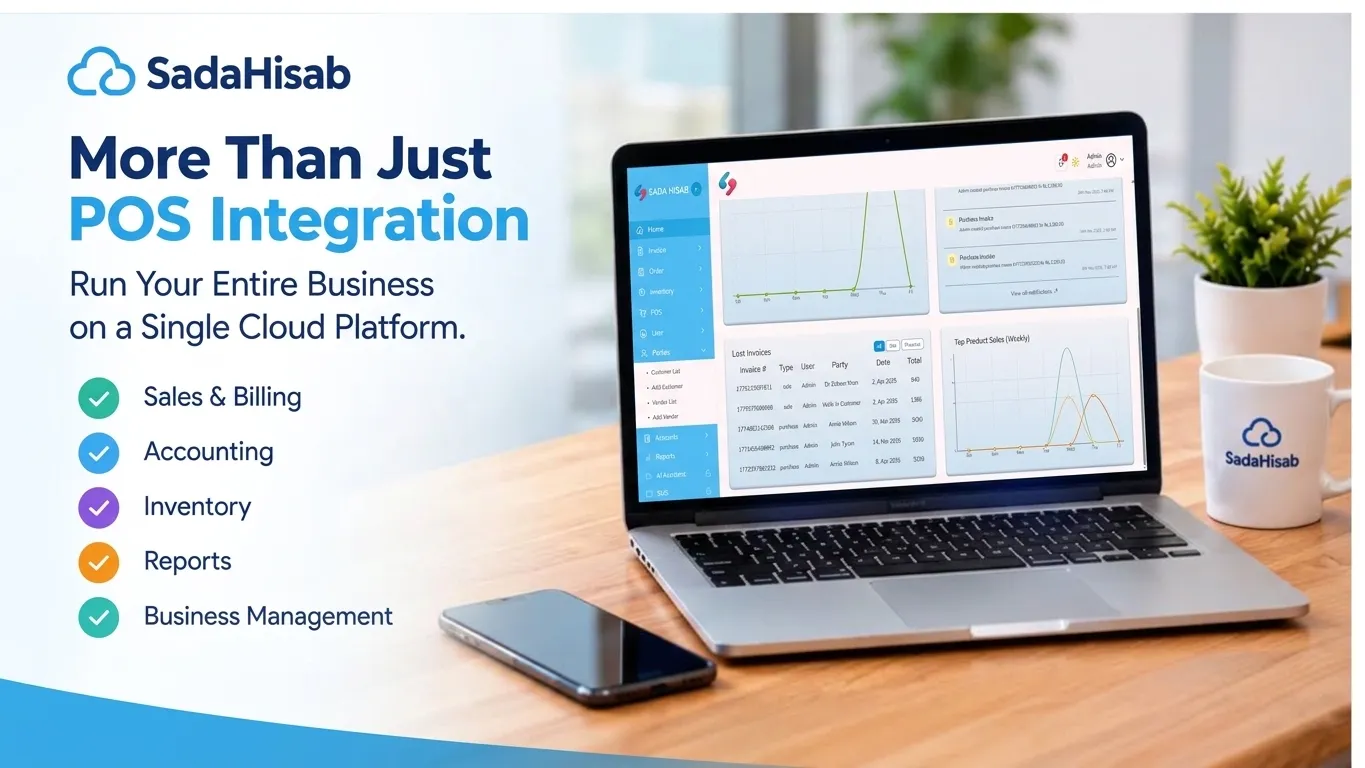
SadaHisab approaches SRB POS integration services as part of a broader cloud POS and ERP environment rather than treating tax integration as the entire product. Your business still needs to sell products and services, manage inventory, track expenses, monitor accounts, review reports, and understand profitability.
With SadaHisab, businesses can manage sales, billing, accounting, inventory, reports, and other operational requirements from a central platform. This can be particularly useful for businesses that do not want separate systems for everyday operations and management reporting.
A POS system should help answer practical questions. How much did we sell today? Which products or services generated the most revenue? What is our inventory position? What happened at each branch? What are our expenses? What does the profit and loss report look like? When SRB POS integration services are combined with these operational capabilities, compliance becomes part of a wider digital business-management system.
Cloud POS, Sales and Inventory Management
SadaHisab is designed as a cloud-based POS and ERP platform, allowing business owners and authorised staff to access relevant business information through supported devices. Cloud access can be especially useful for owners managing multiple branches or checking business performance when they are away from the shop.
For a business investing in SRB POS integration services, this wider functionality matters because compliance alone does not improve business visibility. A well-configured POS should also help management understand sales trends, stock movement, expenses, returns, and profitability.
SRB POS Integration Services Across Sindh
Sindh is not limited to one commercial centre. Businesses in Karachi, Hyderabad, Sukkur, Larkana, Nawabshah, Mirpur Khas, and other cities may have different operational environments but share the need for reliable digital billing and tax-related workflows.
SadaHisab can target SRB POS integration services across Sindh rather than restricting the service to Karachi. This geographic coverage can also help businesses searching for local support find a provider that understands the broader Sindh market.
SRB POS Integration in Karachi
Karachi has a large and diverse service economy, including restaurants, cafés, hotels, salons, gyms, and other businesses. For a busy Karachi restaurant or service provider, the POS system needs to handle high transaction volumes without creating unnecessary complexity for cashiers.
Businesses searching for SRB POS integration services in Karachi can use SadaHisab to explore a broader POS and ERP setup that combines billing, sales, inventory, accounting, reporting, and integration support.
SRB POS Integration in Hyderabad, Sukkur and Other Cities
Businesses outside Karachi can face the same operational challenges while having fewer local technology providers to choose from. Offering SRB POS integration services in Hyderabad, Sukkur, Larkana, Nawabshah, Mirpur Khas, and other Sindh cities gives businesses another route to professional POS implementation and support.
Instead of searching separately for POS software, accounting software, inventory software, and SRB integration, a business can evaluate whether one integrated platform can cover its core requirements.
SRB POS Integration Process With SadaHisab
A professional implementation should be structured rather than rushed. The first step is understanding the business, its branches, services or products, current billing workflow, and applicable SRB requirements. The next step is configuring the POS environment and required business information before testing the integration.
A typical SRB POS integration services workflow may involve:
- Business assessment: Understand the business model, branches, services, products, and existing POS setup.
- Account and configuration setup: Configure the required business and tax-related information.
- POS configuration: Set up products, services, prices, taxes, users, branches, and invoice settings.
- Integration setup: Configure the required connection between the POS environment and SRB process.
- Testing: Test sales, invoices, payment methods, and relevant transaction scenarios.
- Invoice verification: Verify that the integration workflow is producing the expected result.
- Staff training: Train cashiers and managers on the day-to-day billing workflow.
- Ongoing support: Assist with operational issues and integration-related questions.
The exact steps can vary depending on the business and SRB’s current requirements. The purpose of professional SRB POS integration services is to make the transition controlled, understandable, and practical for the people who actually use the POS every day.
SRB POS Invoice Verification and Compliance
Invoice verification is an important part of the SRB POS ecosystem. SRB provides an online invoice verification service where users can enter relevant invoice information to check an SRB POS invoice.
This matters because a POS integration should not simply create an invoice on the customer’s receipt printer and stop there. The transaction needs to move through the applicable integration process correctly. SRB’s online integration rules also provide for customers to verify whether an invoice has been communicated to the Board’s computerized system through available verification channels.
For businesses purchasing SRB POS integration services, invoice verification should therefore be included in testing and onboarding rather than treated as an afterthought.
Benefits of Professional SRB POS Integration Services
The biggest advantage of professional SRB POS integration services is not simply having a technical connection. It is having a POS environment that is configured around the business’s actual workflow.
A properly implemented system can reduce repetitive data entry, improve invoice consistency, give management clearer sales records, and make it easier for staff to follow a defined billing process. It can also reduce the confusion that occurs when a business uses one application for sales, another for accounts, and a separate process for tax-related reporting.
For management, the value is even broader. Sales information can be combined with inventory, accounting, and reporting so the owner can move from “How much did we sell?” to “What is happening across the business?”
This is especially useful when the business is growing. A system that works for 20 invoices a day may not work comfortably for hundreds of transactions across several branches. Investing in SRB POS integration services alongside a scalable POS and ERP platform can help businesses build a more structured digital workflow.
SRB POS Integration Services for Multi-Branch Businesses
Multi-branch businesses have an additional layer of complexity. Each branch needs to record sales accurately, while management needs consolidated visibility across locations. If every branch operates independently, comparing performance and maintaining consistent processes can become difficult.
SadaHisab’s multi-branch capabilities can help businesses manage branch-level operations while giving management access to broader business information. When combined with SRB POS integration services, the business can create a more organised framework for managing applicable sales and invoice workflows across locations.
SRB’s official FAQ specifically identifies restaurants with more than one branch in Sindh among the categories addressed by its POS integration requirements. Businesses with multiple outlets should therefore review their specific obligations and configure their technology accordingly.
Internal linking opportunity: Link “multi-branch POS software” to your SadaHisab multi-branch/POS feature page.
Common SRB POS Integration Problems
Businesses often run into problems not because POS integration is impossible, but because implementation is treated as a checkbox instead of a business process. Incorrect configuration, incomplete business information, poorly trained staff, incompatible software workflows, and inadequate testing can all create operational problems.
One common issue is choosing software without confirming how it handles the required integration workflow. Another is training only the business owner while leaving cashiers and managers unfamiliar with the process. A third is failing to test less common scenarios such as returns, exchanges, cancellations, or other transaction adjustments.
SRB’s official FAQ explains that sales returns and exchange adjustments can be handled through credit notes in the SRB POS system. That is a useful reminder that integration should be tested against realistic business scenarios rather than only a simple sale.
A professional provider of SRB POS integration services should therefore think beyond the initial connection. Configuration, testing, training, troubleshooting, and ongoing support all form part of a successful implementation.
How to Choose SRB POS Integration Services in Sindh
When comparing SRB POS integration services, do not judge providers only by price. Ask what happens after the software is installed. Does the provider configure the POS? Does it assist with integration? Is staff training included? Can the system handle inventory and accounting? Can management monitor multiple branches? What support is available if the POS stops communicating correctly?
You should also check whether the provider understands your specific industry. A restaurant’s requirements are different from a salon’s, and a multi-branch business may need a different configuration from a single-location operation.
A practical evaluation checklist includes:
- SRB POS integration capability
- Business and tax configuration support
- Invoice workflow testing
- Sales and billing management
- Inventory management
- Accounting and profit and loss reporting
- Multi-branch support
- Staff/user management
- Cloud accessibility
- Training and onboarding
- Customer support
- Ongoing system maintenance
The right SRB POS integration services should fit your business instead of forcing your business to reorganise everything around the software.
Conclusion
Digital billing and tax-related POS requirements are becoming an increasingly important part of operating a service business in Sindh. The Sindh Revenue Board provides dedicated POS resources, integration documentation, invoice verification facilities, and updated rules for online business integration. Businesses that fall within applicable requirements should therefore understand their obligations and choose technology that can support their operational workflow.
SRB POS integration services from SadaHisab are designed to combine the integration requirement with broader POS and ERP capabilities, including sales, billing, inventory, accounting, reporting, and multi-branch management. This approach can help businesses avoid treating tax integration as an isolated technical project.
Whether you operate a restaurant in Karachi, a café in Hyderabad, a service business in Sukkur, or a multi-branch operation across Sindh, the objective should be the same: build a reliable digital billing process that your staff can actually use every day.
If you are looking for SRB POS integration services in Sindh then contact sadahisab. Sadahisab help you to evaluate your POS requirements, configure the system, integrate the relevant workflow, train your staff, and provide ongoing support.