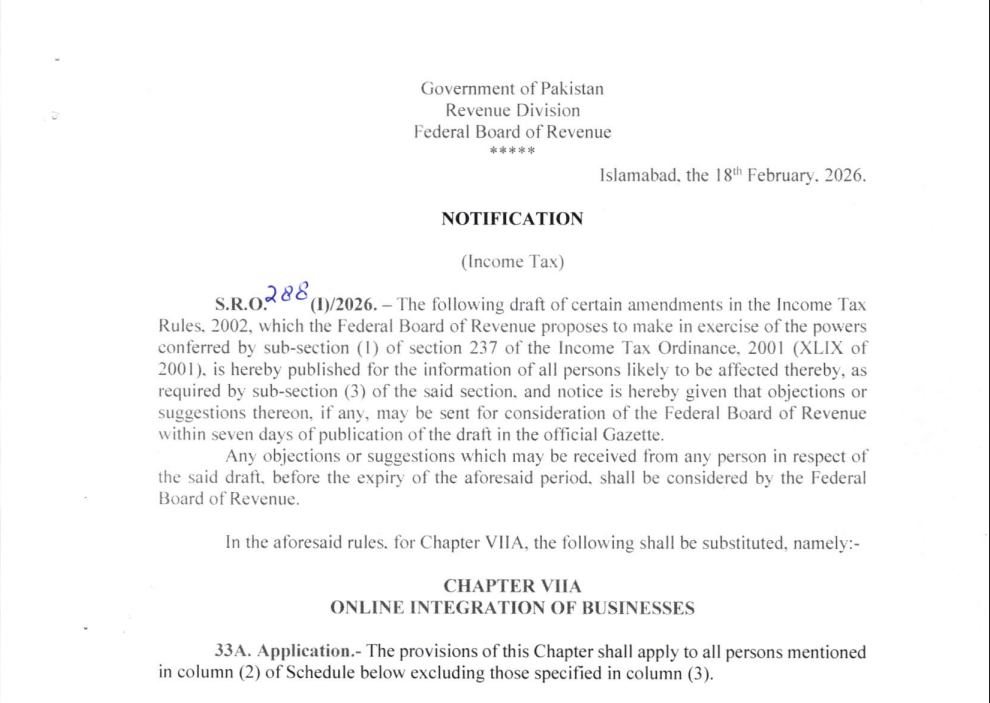
Introduction to FBR POS Integration
FBR POS Integration has become a defining requirement for modern businesses operating in Pakistan. With the government pushing toward transparency and real-time tax reporting, businesses can no longer rely on manual invoicing or delayed tax submissions. We see FBR POS as a structured digital bridge between businesses and the Federal Board of Revenue, ensuring that every sale is recorded, verified, and compliant.
As transaction volumes increase across retail, restaurant, and service industries, FBR Integration enables businesses to remain compliant while maintaining operational speed and accuracy. This article provides a complete, in-depth overview of FBR POS, while highlighting how Sadahisab POS Software simplifies and strengthens this process.
Before implementing FBR-integrated POS systems, businesses should understand how a POS transaction works in real-world retail operations, as this process directly impacts sales reporting and tax compliance.
What Is FBR POS Integration and Why It Matters
FBR POS Integration refers to the direct, real-time connection between a business’s point-of-sale system and FBR servers. Each invoice generated through an integrated POS system is automatically transmitted to FBR for validation.
We emphasize that FBR Integration is not only a regulatory requirement but also a foundation for disciplined financial management. Businesses using FBR POS Integration gain improved visibility into sales data, tax liabilities, and compliance status, all without manual intervention.
How FBR POS Integration Works
The workflow of FBR POS is designed for speed, accuracy, and security:
i- Sale is recorded at the POS terminal
ii- Tax is calculated automatically
iii- Invoice data is sent to FBR servers
iv- FBR validates the invoice in real time
v- A unique FBR invoice number and QR code are generated
This seamless process ensures that FBR POS does not interrupt customer service while maintaining strict compliance.
Industries Required to Implement FBR POS Integration
FBR POS is mandatory for Tier-1 retailers and high-turnover businesses, including:
i-Retail chains and supermarkets
ii-Restaurants, cafes, and food franchises
iii-Pharmacies and medical stores
iv-Electronics and appliance retailers
v-Textile and fashion outlets
vi-Large service providers
For these sectors, FBR POS is mandatory. Non-compliance exposes businesses to penalties, audits, and operational restrictions.
Common Challenges Without FBR POS Integration
Businesses operating without proper FBR Integration often face:
i-Manual tax calculation errors
ii-Delayed reporting and penalties
iii-Inconsistent invoicing
iv-Increased audit risk
v-Poor sales visibility
These challenges restrict growth and damage business credibility. Implementing FBR POS resolves these issues at the root level.
Introducing Sadahisab POS Software
Sadahisab is a modern, Pakistan-focused POS solution developed to simplify FBR and daily business operations. Designed for retailers, restaurants, wholesalers, and service providers, Sadahisab combines regulatory compliance with operational intelligence.
We built Sadahisab with a clear objective: make FBR Integration effortless, reliable, and scalable for businesses of all sizes.
Sadahisab and FBR POS Integration
Sadahisab offers complete and stable FBR Integration, ensuring that every transaction is reported accurately and in real time. Our system is fully aligned with FBR technical specifications and supports high transaction volumes without downtime.
With Sadahisab, FBR POS becomes a background process that works silently while businesses focus on sales and customer experience.
Core Features of Sadahisab POS Software
1- Real-Time FBR and PRA Integration
Sadahisab supports FBR Integration POS along with PRA integration, enabling accurate federal and provincial tax reporting from a single platform.
2-Automated Tax Calculation
The system automatically applies relevant tax rules, ensuring thatPOS Integration remains accurate even during discounts, refunds, and promotions.
3-Digital Invoice Generation
Each invoice includes:
1-Unique FBR invoice number
2-QR code for verification
3-Itemized tax details
This strengthens transparency and customer trust under FBR.
4-Advanced Inventory Management
Sadahisab provides real-time stock tracking, low-stock alerts, and product categorization. Inventory data stays synchronized with sales recorded through FBR.
5-Multi-Branch Business Control
For growing businesses, Sadahisab centralizes multiple outlets, offering consolidated reports and unified FBR POS across all branches.
6-Sales Analytics and Reporting
Sadahisab dashboards deliver actionable insights into:
i-Sales trends
ii-Tax liabilities
iii-Product performance
iv-Peak business hours
These insights transform FBR data into strategic decision-making tools.
7-Cloud-Based Security
All data transmitted through Sadahisab POS is encrypted and securely stored with fbr , ensuring compliance, privacy, and system reliability.
Benefits
By using Sadahisab for FBR POS Integration, businesses gain:
1- Guaranteed regulatory compliance
2- Reduced administrative workload
3- Accurate financial records
4-Improved customer confidence for future growth
We position FBR Integration as a growth enabler rather than a compliance burden when implemented through the right system.
Sadahisab for Restaurants and Food Businesses
Restaurants operate under intense transactional pressure. Sadahisab ensures that Integration works seamlessly with fast billing, table management, and dynamic pricing, without slowing service speed.
Sadahisab for Retail and Wholesale Businesses
Retailers benefit from barcode billing, supplier management, and bulk inventory control, all synchronized through FBR for real-time compliance.
Data Security and Compliance Assurance
Sadahisab prioritizes secure FBR Integration through encrypted APIs, role-based access, and regular compliance updates. This ensures uninterrupted operations and audit readiness.
The Future of FBR POS Integration in Pakistan
As Pakistan advances toward a fully digital tax ecosystem, FBR will continue to expand into analytics-driven compliance and automated audits. Sadahisab is built to evolve with these changes, ensuring long-term compliance and adaptability.
Why Businesses Choose Sadahisab
We present Sadahisab as a complete business management solution that combines:
1-Reliable FBR POS Integration
2-Operational automation
3-Data-driven insights
4-Scalable architecture
Sadahisab empowers businesses to operate confidently within Pakistan’s regulated digital economy.
Conclusion
FBR POS Integration is a critical requirement for transparency, compliance, and sustainable growth in Pakistan. Businesses that adopt fbr POS integration through a robust platform like Sadahisab gain more than compliance. They gain efficiency, visibility, and strategic control.
We believe that the right POS system transforms FBR POS into a competitive advantage. With Sadahisab, businesses remain compliant, agile, and future-ready. Contact Us Now to get your FBR integrated POS today.
FAQS
1. What is FBR POS Integration?
A- FBR digital POS is a system that connects a business’s point-of-sale software directly with the Federal Board of Revenue. It enables real-time transmission of sales invoices to FBR servers, ensuring transparent reporting, accurate tax calculation, and instant invoice verification.
2. Who is required to implement FBR POS Integration in Pakistan?
A- FBR digital invoicing is mandatory for Tier-1 retailers, large restaurants, pharmacies, supermarkets, and businesses that exceed the turnover thresholds defined by FBR. Non-compliant businesses may face penalties, audits, or operational restrictions.
3. How does FBR POS Integration benefit businesses?
A- FBR integrated POS helps businesses maintain legal compliance, reduce manual errors, automate tax reporting, and create a complete digital audit trail. It also improves customer trust by issuing FBR-verified invoices with QR codes.
4. Can FBR POS Integration work with multi-branch businesses?
A- Yes, modern systems support centralized FBR POS across multiple branches. Businesses can manage all outlets from a single dashboard while ensuring real-time reporting and consistent compliance at every location.
5. What happens if a business does not implement FBR POS Integration?
A- Failure to implement FBR POS Integration can result in heavy fines, tax notices, audits, disconnection of utilities, and suspension of business operations. Implementing a certified POS system ensures uninterrupted compliance and business continuity.