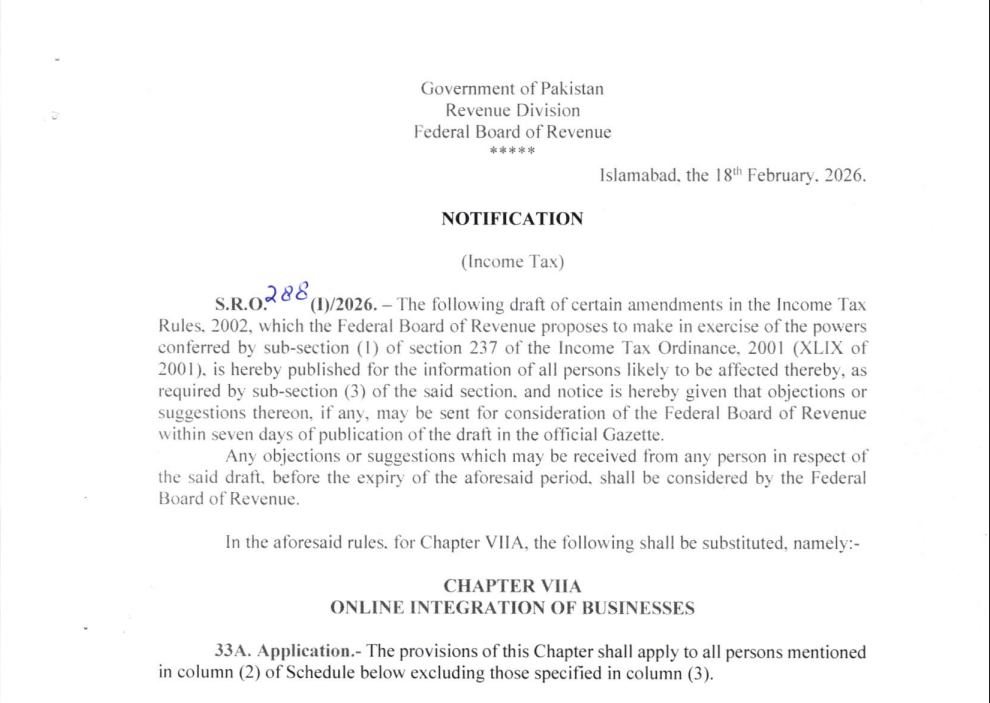
Taxation plays a vital role in shaping Pakistan’s economy, and every business big or small has a responsibility to comply with the FBR Business Tax structure. As 2026 unfolds, several new FBR updates have been made to make tax filing simpler and more transparent. Whether you’re running a startup, an eCommerce store, or a large corporation, understanding these new rates and processes is crucial for staying compliant and avoiding unnecessary penalties.
Understanding FBR Business Tax
The FBR Business Tax system covers all forms of taxation applicable to registered businesses across Pakistan. These taxes vary based on business type, income, and industry. From income tax to sales tax, each category serves a specific purpose to ensure fair contribution to national revenue while supporting public development initiatives.
Types of Business Taxes in Pakistan
1- Income Tax
Every business earning profits in Pakistan must pay income tax to the FBR. The rate depends on your taxable income, with progressive slabs introduced to support small enterprises while holding large corporations accountable.
2- Sales Tax
Sales tax applies to the sale of goods and certain services. The general rate remains 18%, though some industries like exports or essential commodities may enjoy reduced rates or exemptions.
3- Federal Excise Duty
This tax applies mainly to manufacturing and import sectors, covering goods such as cement, sugar, and petroleum products.
4- Withholding Tax
Certain payments, such as professional fees, rent, or supplier payments, require withholding tax at source. This helps the FBR track and collect revenue efficiently.
Who Needs to Pay FBR Business Tax?
Every registered business operating in Pakistan must pay FBR Business Tax. This includes:
1- Sole proprietors
2- Partnerships
3- Private and public limited companies
4- Freelancers and online sellers (above income threshold)
If your income exceeds the prescribed limit, registering with the FBR and paying taxes isn’t optional, it’s mandatory.
FBR Business Tax Rates in 2026
1- Small Businesses
For small businesses earning less than PKR 100 million annually, tax rates typically range from 10% to 15%. These rates aim to encourage entrepreneurship and support Pakistan’s SME sector.
2- Medium and Large Businesses
Medium-sized enterprises fall under a 20% tax rate, while large corporations can pay up to 29%, depending on their net income and industry type.
3- Corporate Tax Rates
The corporate tax rate for private and public companies stands at 29%, though manufacturing and export-based businesses may qualify for reduced rates.
How to File Your FBR Business Tax Returns
Filing your FBR Business Tax is now streamlined through the IRIS online system. Here’s a quick process:
i- Log in to your IRIS account.
ii- Fill out the income and sales details accurately.
iii- Upload your digital invoices and expense statements.
iv- Review your calculations before submission.
v- Submit before the annual deadline to avoid penalties.
Pro tip: Always keep digital records of your financial activity to ensure smooth auditing if required.
FBR Registration Process for Businesses
Registering your business for tax purposes involves a few simple steps:
Visit the FBR IRIS portal.
Create your user account using your CNIC.
Provide your business name, address, and category.
Obtain your National Tax Number (NTN).
This NTN becomes your identity for all future tax filings.
Common Mistakes to Avoid When Filing Taxes
Many business owners unintentionally make errors that can lead to fines. Avoid these common issues:
i- Submitting incomplete information.
ii- Failing to match sales records with supplier data.
iii- Missing filing deadlines.
iv- Neglecting to verify invoices.
Keeping proper records and using automated tools can prevent these costly mistakes.
Digital Transformation of FBR and E-Filing
The FBR is embracing digital solutions for greater efficiency and transparency. Through e-filing and digital invoicing, businesses can file returns, verify invoices, and monitor tax payments in real time. This move has reduced paperwork and eliminated the need for physical submissions.
Sada Hisab – The FBR Integrated Digital Invoicing Software
In this new digital era, Sada Hisab has emerged as one of Pakistan’s most reliable accounting and invoicing solutions. Fully integrated with FBR, it automates compliance for business owners by generating digital invoices that sync directly with the FBR system.
Sada Hisab is built for both small and large businesses, offering user-friendly dashboards, expense tracking, and real-time reports that keep your business financially transparent and tax-compliant.

How Sada Hisab Makes Tax Filing Easier
With Sada Hisab, you can:
i- Create and send FBR-verified invoices instantly.
ii- Automatically calculate sales tax and other deductions.
iii- Integrate your business data with the FBR e-portal in real-time.
iv- Access monthly tax summaries and reports with a single click.
This means no more manual entries, missed filings, or calculation errors.
Advantages of Using FBR-Integrated Software
1- Accuracy: Automated systems eliminate human errors.
2- Time Efficiency: Save hours of manual calculations.
3- Transparency: Every transaction is recorded digitally.
4- Compliance: Stay up to date with the latest FBR tax regulations.
For business owners aiming to stay ahead in 2026, using a tool like Sada Hisab is no longer is necessary.
FBR Penalties and Legal Consequences
Ignoring your tax duties can be expensive. The FBR may:
i- Impose heavy fines on delayed or false returns.
ii- Suspend your tax registration (NTN).
iii- Initiate audits or legal proceedings.
It’s always better to stay compliant rather than face financial and reputational damage later.
Tips for Managing Business Taxes Effectively
1- Maintain organized financial records.
2- Use digital tools like Sada Hisab.
3- Review your returns before submission.
4- File taxes early to avoid last-minute errors.
5- Consult professionals if your finances are complex.
Good financial discipline ensures long-term business growth and peace of mind.
Future of Business Taxation in Pakistan
As technology evolves, Pakistan’s taxation system will continue shifting toward full automation. The FBR aims to connect all business activities digitally, reducing corruption and increasing transparency. Tools like Sada Hisab will become the standard for every compliant business in the coming years.
Conclusion
The year 2026 brings new opportunities and responsibilities for Pakistani businesses. Understanding and managing your FBR Business Tax obligations is key to sustainable growth. By adopting digital tools like Sada Hisab, you can simplify tax filing, eliminate errors, and maintain compliance effortlessly.
Tax season doesn’t have to be stressful, just stay organized, stay digital, and stay compliant.
FAQs
1. What is the main purpose of FBR Business Tax?
It ensures businesses contribute their fair share to national development through transparent tax systems.
2. How do small businesses pay their FBR Business Tax?
They can file online through the FBR IRIS system or use digital software like Sada Hisab.
3. Are freelancers required to pay business tax?
Yes, if their income exceeds the taxable limit set by FBR.
4. Is Sada Hisab connected with FBR systems?
Yes, it’s fully integrated and automatically syncs invoices with FBR for compliance.
5. What happens if I miss the filing deadline?
You may face penalties, late fees, or legal actions from the FBR.